The Listing Presentation Script for New Realtors (Plus the Top 10 Objections)
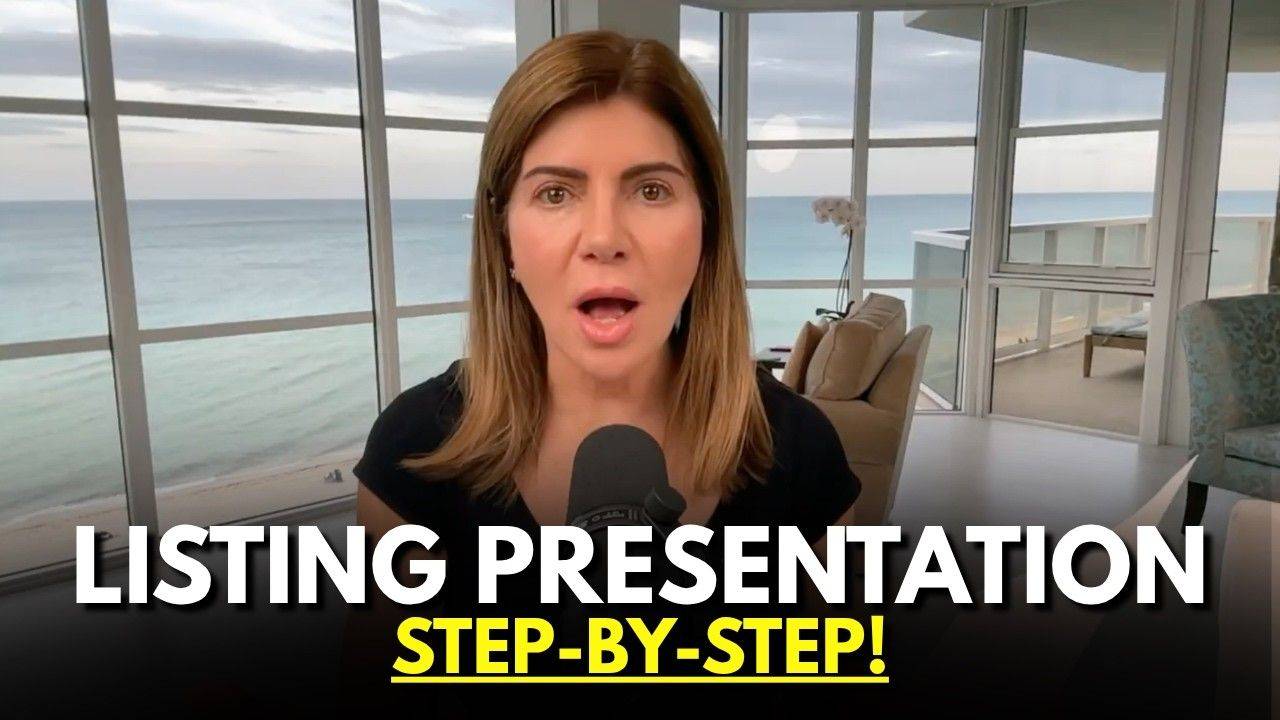
What should a new realtor say on a listing presentation? Follow four parts: introduce yourself and confirm their motivation, present an active and aggressive marketing plan, walk them through the market analysis so they arrive at the price, then write the price on the listing agreement and ask them to sign. Handle every objection by repeating and approving it, then asking again.
Key Moments in the Video
- 0:00 Introduction
- 1:07 The four parts of your listing presentation
- 1:33 Part 1: Arrive and confirm their motivation
- 3:36 Part 2: Your marketing plan
- 11:02 Part 3: Pricing the home
- 16:12 Walking through the market analysis
- 23:50 Part 4: Ask them to sign
- 25:28 Objection: I want to think it over
- 32:14 Objection: I want to list higher
- 34:57 Objection: Can you cut your commission
- 38:01 Objection: What do you do differently
- 42:03 Objection: Another agent said they can get more money
- 45:53 Objection: Have you sold in my area
- 46:08 What to say if you're a new agent
Work with me → 24 Listings in 12 Months: https://www.salesxtraining.com
Part 1: Introduce Yourself and Confirm Motivation
Show up professionally dressed, shoulders back, smile on your face, firm handshake. Then say:
"Mr. Seller, I'm really excited to work with you in the sale of your home, and I want to assure you that my goal is to sell your home for the most money possible, in the least amount of time, with the least amount of hassle. That is what you want, isn't it"
Body language is 55% of your communication. Ask them to show you through the property, which takes about five minutes. As you walk, confirm what they told you about where, when and why they're moving, and ask: "is there anything else that is important to you about the move that I should know about"
Part 2: Active vs. Passive Marketing
This is the most important part, because it answers the seller's biggest question: what are you going to do differently? Passive marketing is what 99.9% of agents do: MLS, websites, open houses, photos, and then they hope buyers will see it. That passive approach is one of the main reasons the average agent sells two or three homes a year.
Explain everything on your marketing plan, plus three items: you'll personally contact the top agents in your area, you'll create online exposure with the right price, professional photos and an excellent description, and you prospect Monday through Friday from 8 a.m. to 12 p.m., speaking with 40 to 50 people a day. If you say this, you'd better be doing it. Sellers used to look at me like I was an alien when I told them.
Part 3: The Price Conversation
Use the computer example. Two stores sell the same $1,000 computer, but the second one has a faster processor. Which would you buy? Now the second store charges $1,500 for it. Which one now? Buyers think exactly the same way. The average buyer looks at 10 homes, so their home is competing against nine others.
Bring four active listings and four sales from the last six months, as similar as possible, and be able to explain the differences like an appraiser. Walk them through each one, then ask what price they feel will make their home the next sale in the area. If they say "you're the expert, you tell me," go through the market analysis again slowly so they see what you see. Homes that are priced correctly sell, and they tend to sell within the first two weeks.
Part 4: Ask Them to Sign
Before you start, put the completely filled out listing agreement in front of you with a pen on top. Only the price is blank. It's a subliminal close. Once you agree on a price, write it in as you say it, point to the signature line, hand them the pen and ask them to sign.
Objections 1 to 5
The common denominator is to repeat and approve. 1. "I want to think it over." Remind them your goal is the most money, least time, least hassle, and ask: "do you believe that I can get this property sold for you" If yes, "it sounds like your decision's already been made." 2. "I'm interviewing other agents." Agree they want an agent they feel confident can find the buyer, and ask if they feel confident you're that agent. 3. "I want to list higher." Explain that homes priced right from the start sell faster and closer to asking, and the first two weeks bring the most exposure. 4. "Can you cut your commission." Often they just ask. If not: "if these agents don't have the courage to stand up to you regarding their own commission, how strong can they possibly be defending you and the price." 5. "What do you do differently." Your marketing plan already answered it.
Objections 6 to 10
6. "Neighborhood specialist." A buyer would want to see every home that fits, not just one agent's listings, and you work the whole area, which brings in buyers who don't know the neighborhood exists. 7. "Another agent said they can get me more money." Some agents take overpriced listings as bait to attract buyers. 8. "I'm making repairs first." Ask if they'd sell as-is today at an acceptable price, then list now, because buyers are a moment in time. 9. "Have you sold in my area." If you're brand new, tell the truth and make their home your number one priority, backed by your broker and coach. 10. "How long have you been in real estate." Sellers ask when you've made them feel insecure. Sellers are a mirror of you. When you're confident, they feel confident.
FAQ
What are the four parts of a listing presentation
Introduce yourself and confirm motivation, the marketing plan, the market analysis and price, and asking them to sign.
How many comparables should I bring
Jackie recommends four active listings and four sales from the last six months, as similar as possible to the home.
How do I handle I want to think it over
Repeat and approve it, remind them of your goal, and ask if they believe you can get the property sold. If yes, their decision's already been made.
What do I say if I'm brand new and haven't sold in their area
Tell the truth, explain that their home will be your number one priority, and name the resources behind you, like your broker and coach.
Hi, I'm Jackie Kravitz. I've been in real estate since 1996 and I have coached over 10,000 real estate agents around the world. I personally listed 150 homes a year for many years in one of the most competitive markets in the country and 100% of my business came from listings sold. By the end of this video, you'll know exactly what to do and what to say on your listing presentations, plus how to handle the top 10 objections so you can win 100% of your appointments. If you haven't done so yet, make sure you download my new top listing agent 2.0 script book. It's a free download at salesxtraining.com. I'm going to take you through the listing presentation script. It is in the script book. I have my iPad here in front of me. I have the listing presentation script so I make sure that I cover everything with you and you can follow along with your script book as well. There are four parts to your listing presentation. Part one is obviously you introduce yourself and you confirm their motivation. Part two is your marketing plan. Part three is the market analysis and having a conversation about the price. And part four is asking them to sign the contract. It really is quite simple. So part one, you arrive at the home. Obviously, you're professionally dressed. You knock on the door. You have your shoulders back, smile on your face, firm handshake. You introduce yourself and you say to them, "Mr. Seller," you use their name, "I'm really excited to work with you in the sale of your home, and I want to assure you that my goal is to sell your home for the most money possible, in the least amount of time, with the least amount of hassle." That is what you want, isn't it? Notice my body language. Body language is 55% of your communication. So, make sure you use it congruently with what you're saying. So, they're going to agree, yes, that's what I want. Now, you ask them to show you through the property. This should take about five minutes, and it's a great opportunity for you to build rapport and confirm their motivation. So, as you're walking through the house, at some point, you're going to say, "Now, Mr. seller. When we spoke earlier, you told me that you're moving to Dallas because you want to be close to your family and you would like to be there in the next two months, right? And they're going to say, "Right, cuz that's what they told you." And if something changed, they will let you know. And now you're also going to ask this question, "Mr. Seller, is there anything else that is important to you about the move that I should know about? Why are you asking this? Because when you spoke with them earlier and you set this appointment, they told you where they're moving to, when they want to be there, and why they're moving, but they didn't know who you were. They hadn't met you. Maybe there's something else that is important for you to know about the move that they didn't tell you before. So, here is a chance for them to open up and tell you. Part two, which is your marketing plan. Now, this is the most important part of your presentation because it's going to answer the most common question that sellers have, which is, "What are you going to do to sell my house? What are you going to do differently from other agents to get my house sold?" In other words, why should I list with you and not somebody else? And this is where your active and aggressive marketing approach comes in. So you're going to start, if you read the script, you'll see you're going to say, "Mr. Seller, are you familiar with the difference between passive marketing and active marketing in regards to real estate?" Doesn't matter what they say. You're going to say, "See, Mr. seller. Passive marketing is what 99.9% of agents do. They put a home in the multiple listing service. They put it on hundreds of websites. They may do some open houses and have a professional photographer take pictures of your home. And then they basically hope and pray that somehow your property will sell. Now, the trouble with these methods, Mr. seller is that the agent basically sits around and waits for the buyer to find them. When they when an agent holds an open house, well, they sit here in your property and they wait for people to walk through the door. When they put it in the multiple listing, now they're hoping that other agents will see your property and bring in their buyers. Online exposure, same thing. They're hoping somehow that buyers will see it and contact them. Mr. Seller, this passive approach is actually one of the main reasons why the average agent in our country sells two, three homes a year. And I have a goal to sell 25 homes this year. In addition to obviously some of these marketing strategies, passive marketing strategies that I use, I'm going to actively and aggressively market your home. Let me show you how I'm going to do that. Now, when you look at the script at this part in the presentation, it says, "Explain each item on your marketing plan." So, whatever you do, multiple listing and the online exposure and the photos and videos, whatever you do is included. Plus, make sure you include the three items that you'll find on my listing presentation script, which is first one, Mr. seller, I will personally contact the top agents in our area to let them know that your home is for sale and invite them to bring in their buyers. Now, this is critically important, Mr. Seller, because currently in our multiple listing service, we have over 10,000 residential properties for sale. So unless I personally contact these top agents, it's very easy for your home to get lost in the shuffle. And my job is to make sure that doesn't happen. [snorts] The second part of my aggressive marketing, Mr. Seller, is online exposure. Now, I'm sure you would agree that in this day and age, most buyers start their home search online and then they contact a local agent. And when we think about the thousands of properties that are available for sale currently, Mr. seller. One of the most important things that is going to attract buyers to your home is the price. And we'll talk about that in just a couple of minutes. Okay. Now, the other critical aspect in creating online exposure is making sure that we have beautiful professional photos of your property and an excellent description of your home that will cause your property to stand out amongst all the other homes for sale. I am an expert on that. Okay. And part three, Mr. Seller. Now, this is what separates me from 99.9% of agents. Monday through Friday, from 8:00 a.m. until 12:00 p.m. I am on the phone looking for buyers and sellers. Now, that is how I found you, right? I called you over the phone. Obviously, time out. If you're going to say this to your sellers on listing presentations, you better be doing it. This is exactly how I listed thousands of properties for sale. I used to say this to sellers at the appointment and they would look at me like I was an alien. Like, really, you do that? Why were they so shocked by me saying that I do that? Because most agents don't do that. They do only the passive marketing strategies. So, let's get back to the script. Then you say, "Mr. Seller, I speak with 40 to 50 people every day about buying and selling real estate." Now, Mr. Seller, you and I both know there's a buyer for your house out there. My job is to go find them, not wait for them to find me. I'm going to find them. And that's what you would expect an agent to do for you, isn't it? Well, yeah, that's what I would expect. Great. That's exactly what I'm going to do. Now, here you could, it's actually says it in red. When you download the script book, you could expand on this. You could tell them who you call. I call expired listings. I call for sale by owners. And depending on how you find them, they can totally relate. And you're also going to call around their property to let them know to let you're going to call hundreds of their neighbors to give them information on their property. That is the circle prospecting script. You have all of these scripts in in your top listing agent 2.0 script book. So you could expand on it, explain to them what you do. You could even invite them to stop by your office any Monday through Friday, 8:00 a.m. till 12:00 p.m. and watch how you work. What an incredible way for for yourself to be accountable to your sellers for the job that you're committing to do. That's part two. Obviously, I already mentioned if you do other things to market the home, there are other items in your marketing plan, you explain those. But make sure that you include these three. Part three of your listing presentation is the price. Now, if you want your homes to sell, they need to be priced right. It's great to take listings. That's your job, but it is your responsibility to get them sold. That's what sellers are hiring you for, not to list them, to sell them. And for them to sell, they need to be priced right. So, now we're going to take him through the dialogue to price this property correctly. Mr. Seller, as a real estate expert, I study the real estate market every day. My goal is to share some really important information with you so you can clearly understand what is going on in our market today. and then together we can agree on a price that will get your home sold so you can be in Dallas in the next two months. That sounds great, doesn't it? Now, Mr. Seller, let's think like a buyer for a moment. Let's say that you want to buy a new computer. Could use whatever example you want. I put the computer on the script script. It's just an easy one. Let's say you want to buy a new computer. You go to one store or you check a store online and you find the computer you want for $1,000. Like most consumers before you go ahead and buy it, you're going to look around. You're going to do a little bit of shopping to make sure that you're getting a good deal. and you find the same exact computer at another store for $1,000. The price is the same except the second store, that computer has a much faster processor. Now, they're the same price, exactly the same computer. The second one with a faster processor, which one would you buy? Let them answer. Make sure that every time you ask a question, you pause and let them answer. Don't answer it for them. So, obviously, they're going to say the second one, and you're going to say, "Of course, because I mean, Mr. Seller, the second one is a better value because you're getting more for the same price, right?" And they're going to say, "Yeah, that's right." So, even if you don't necessarily need a faster processor, if the price is the same, of course, you'll take it, right? They're going to say, "Yeah, that's exactly right." Now, Mr. Seller, what if the second store changed the price of their computer to $1,500? So now that faster processor is going to cost you $500 more. Which one would you buy then? They're going to say, "Well, I guess since I don't need that, I'm going to buy the first one." That's right. Because what happens, Mr. Seller, see, is if they charge for that extra feature, the value is no longer there. That makes sense, doesn't it? This is a very important dialogue. Okay? And again, you'll have it word for word. See, Mr. Seller, home buyers think exactly the same way. They have a lot of choices in today's market, and the average buyer looks at 10 homes before choosing which one to buy. So, your home is competing against nine other homes at any given time. Buyers walk through house after house after house and they look for the one that offers the most features and updates for the least amount of money. See, buyers, Mr. seller just like you. They look for more for the same price or a lower price. When you think about it, it's all about price. Now, it's very important that you take sellers through this dialogue because again, if their home offers more than the competition and the price is the same, their home is more valuable. If they decide to ask more for their house because they have some additional things that other homes don't have, the value goes down. So, they need to understand this because it's critical in pricing the home correctly. Now, this was a timeout that was between you and me here. Now, back to the script. Mr. Seller, in order to determine the price, let's take a look at some of the homes that are currently listed for sale and a few that have recently sold. Time out. This is your market analysis. I recommend that you select four active listings and four recent sales in the last six months in the area, neighborhood, subdivision where this property is located. You did that ahead of time. You have your market analysis with you. And obviously you want to select for activives and foreclosed sales that are as similar as possible to their home. And if there are some differences, you need to be able to explain to the seller what these differences are worth. And this is how appraisers appraise homes. So actually having uh an appraisal, studying an appraisal is going to help you understand if their house doesn't have a pool and the recent sale has a pool, the appraiser is going to take away from the subject property, whatever they believe that pool is worth. So it it's adjustments that appraisers make. And if you do a market analysis and all the comparables are not exactly the same, you need to be able to do the same thing. That's what an expert real estate agent will do. So, let's take a look, Mr. Seller, at some of these homes. So, we can decide what is the highest price that we can sell your property for in today's market. So now you're going to take them through each of the active listings one by one slowly. Your goal here is to help them understand what their competition is, which is the active listings, and what the recent sales are and how it compares to their property, which is critical information because that's how appraisers appraise properties. They look at recent sales and how they compare. [snorts] And it's critical that the property is priced right because if it is overpriced, it's not going to sell. And even if it's sold, it's not going to appraise. And if a buy the buyer is getting a mortgage, which most buyers do, then they'll be back to square one. And the property won't they won't be able to close if it doesn't appraise. So you take them through each property. Mr. seller. This first property here is at 123 Main Street. Um, are you familiar with this home? Have you been inside the property? It's possible. Maybe it's an active listing. Maybe they did an open house and they walked in or maybe it's a neighbor that they're friends with. So, if the reason why you ask, are you familiar with this property? is because if the seller knows the house, they've been in the house, they probably know the house better than you do, or they might know it better than you do, which is something you want to know ahead of time if they know the property. So, and then you tell them, "This one has three bedrooms, two bathrooms, it's 3,000 square ft, very similar to your home. This is this these are the features. and this is the age of the property, the size of the lot, all of the things that make a difference in the price of a home. So, you're going to walk them through step by step, and then you're going to show them what it's priced at, and you're going to go through one by one, then the recent sales, what they were asking, and what it sold for, and then when you're done going through each one, you're going to ask them, "So, Mr. seller. Based on all of this information, the recent sales and the active listings, what price do you feel we need to put on your property? So, your home will be the next sale right here in the area. Wait for them to answer. Ask them. In addition to the market analysis, you may also want to share with them some information about the market in general, the days average days on market. You could get all this information from your board of realtors. The average days on market, the number of homes that are currently for sale, how many sold in the last 30 days, what is the average price? Because how many homes are for sale and how many are selling each month gives you an indication of what kind of market you're in. Is it a buyer market, a sellers market, a neutral market? Obviously, this makes a difference in how properties should be priced and how fast or or how long it's going to take for them to sell. Now, when your properties are priced right, they will sell. So, if you take a listing and it's sitting on the market for 30 days and you're not getting enough showings, it's overpriced. I don't care if it's a buyer market, a sellers market, or a neutral market. Homes that are priced correctly, they sell and they tend to sell within the first two weeks. So, now you ask them their opinion on the price. Wait for them to answer. If they look at you and they say, "Well, you know, I don't know. You're the expert. You tell me." Here's how you're going to respond. You're going to say, "Mr. Seller, obviously, based on all of this information, I have an opinion of the price, and I want to take another look at these properties with you because I want you to be able to see the same thing that I see. Okay. So, you're going to go through the market analysis again. Slowly answer any questions they may have. Pay attention to their body language. When you ask questions, when you say certain things, how are they responding? The truth is when you walk into a listing appointment with a well-prepared market analysis, you have an opinion of the price and your job is to help them understand how you came to the conclusion that you came to based on the market conditions and the recent sales and the active listings. This is not that complicated. The trouble is that sellers base their opinion of price and how much they want to sell it for based on how much they pay, how much they need to make the move, how much they invested on the property and you have an opinion on price based on reality which is recent sales and market conditions. So you just have to help them now understand so they can come to the same conclusion that you did. So this is part three of your appointment and part four is very simple. It's asking them to sign the contract. Now you had the contract. Let's pretend this is the listing agreement. These are the top 10 objections. I'm going to go through them with you now. So before you started your presentation, you take the listing agreement, you bring it with you. It's completely filled out. Their name, the address, the commission, the expiration. They The only thing that's blank is the price. And before you start your presentation, you put that listing agreement in front of you and them right here where you are. And you put a pen on top of it. That's it. You don't say anything. You just put it there. It's a subliminal close. That's the contract. There's a pen on top of it. So now once you agree on a price, part four, ask them to sign. The agreement is already on top of on top of the counter or table where you're at. So you're going to grab that pen. You're going to write the price down. So Mr. Seller, let's go ahead and price your property at 499,000. So you're writing as you say it, and I just need your signature right here. Point to the signature line. hand them the pen and ask them to sign. That's it. That's the last part. That's how you win on listing appointments. It's very simple. Now, they may have some objections. So, what are their top 10 objections? So, I wrote this down. Number one, I want to think it over. I want to sleep on it. I want to think about it. you know, it can come in different ways, but the bottom line is they're not ready to sign right now. So, they give you that objection and you say, "Okay, by the way, I'm going to give you the top 10 and how to respond and you're going to see a common denominator." When you hear an objection, you're going to repeat, acknowledge the objection, and validate the fact that, you know, this this is a great question. It's important. I'm going to repeat and approve. I call it every time. So, I'll show you how to do it. So, Mr. Seller, I completely understand you wanting to to give it some thought. Obviously, this is a a very important decision you're about to make in in the agent who you list with. And Mr. seller. I want to assure you again, as I mentioned in the beginning of of of our meeting, that my goal is to sell your home for the most money possible in the least amount of time with the least amount of hassle and aggressively market your home daily so I can find the right buyer for your home. And Mr. seller, based on all of the information that I shared with you today, do you believe that I can get this property sold for you? And hopefully you've done a an amazing job and the answer is going to be yes. So, if they say, "Well, yeah, I believe you can do it." Well, it sounds like your decisions already been made. Let let's go ahead and get the paperwork signed so I can go to work and and find the buyer for your property. I just need your signature right here. Point to the signature line. Again, that simple. Now, if they actually say, well, you know, but they if they say no, they have another objection. Sometimes this I want to think it over is hiding some other objection. Okay, another way for you to respond this real quick. If they keep going and they say, "Well, no, you know, I really want to think about it." You say, "Mr. Seller, I understand." And when you consider the decision, there are three parts to the decision that you're about to make. Part one is your motivation to sell the house. And it sounds based on what you told me, Mr. Seller, that that decision's already been made. You're definitely moving to Dallas and you would like to be there in two months, right? Motivation. Part two, Mr. Seller, is the price that we set on your home and based on our conversation and all the properties that we looked at it together. Do you feel confident that $4.99 is the right price to get this property sold? You already agreed on it. You just want to make sure that they're not hung hung up on the price. And then part three is the agent that you will hire. So again, Mr. Seller, based on all the information that I shared with you today. Do you believe that I can get this property sold for you? Notice I'm nodding my head yes. And again, hopefully you've done an amazing job and they're going to say yes. Sounds like your decisions already been made. Let's go ahead and get the paperwork signed. So, you got those two options or the three parts of the decision and the first one which is simpler. Okay, great. Second objection that you could get. I'm interviewing other agents. And you're going to say and Mr. seller, I completely understand you thinking of interviewing other agents because obviously I would imagine that in this process of selecting the right agent, you want to make sure that you list with someone who you feel confident can find the buyer for your property, right? Yeah, exactly. That's right. Again, based on all of the information that I showed you today, Mr. Seller, do you feel confident that I am that agent? Now, you're going to notice that when I'm handling these objections, I'm repeat some of the it's it's almost like they're not all completely different, but the seller is not going to get they don't have this list of 10 objections. So, it may sound a little bit like, well, you just said that. Yeah, but they're not giving you one objection after the other. You just need to learn how to respond. Okay. [snorts] If you are an agent that has a strong track record that you can use when they're saying they're interviewing other agents, Mr. seller. Another option, I'm sure in this process of selecting an agent, you want to make sure that you find an agent that is part of the top 1% of agents in the area, right? So, if you're part of the 1%, you can say that or top 5% or whatever you fit in there. If you're brand new, just go with the first option. And if they say, "Wow, exactly. That's right, Mr. Seller. Here's the great news. In your first appointment with me, you found that agent and I am confident that I will sell this property for you. Like I said, quickly and for the most money possible. Let's get the paperwork signed so I can go to work for you. Hand them the pen. Point to the signature line. Ask them to sign. Remember, okay, this is important. Sometimes when sellers give you objections, it's just because selling a home and choosing an agent is an important decision. Their house for most people is their biggest asset and they're just, you know, a little on the fence. They need a little nudge. It's not like they're so committed to the objection. They're just kind of a little hesitant. And when you give them the little nudge, they're like, "Okay, let's go." So, I want you to think that way. Okay. I want you to be confident in yourself. I don't want you to be like get in your head. Sometimes it's just, you know, it's just confirming so they feel good and they go ahead and sign. Here's the third one on the list. I want to list higher. Well, yeah, you know, let's say they want to think it over and it's about the price. Well, yeah, you know, I did see $4.99, but I want to list at 530. So now you have a couple of options. You could explain to them, Mr. Seller, certainly listing at 5:30 is an option. And what concerns me about that, Mr. Seller, is that as and you may actually it would be a great idea for you to have some stats in front of you or even the market analysis if supports what I'm about to say. The properties that sell faster and closest to their asking price are the ones that are priced correctly from the very beginning. In essence, Mr. Seller, if we price it at 530, we may miss an opportunity to get your home sold for more money. We can't possibly underpric your home because the market will catch up with the price and properties tend to get more exposure in the first two weeks and if we're priced higher in the very beginning. We may lose some of that exposure and it will cause your home to sit on the market longer than it needs to. And there's a lot of surveys and studies and stats that show that the longer a house sits on the market, the bigger the gap between the list price and the sales price. Now, you also want to use your common sense. Ideally, you would take every listing price correctly, but if there's high motivation and the seller understands that if they if you choose to take the listing a little bit higher and the seller understands that that first week, two weeks is a critical time. So, if they don't get enough showings or an offer within the first week to 10 days, they will need to adjust the price. So, if you take a price higher, you want to make sure that you set them up with that understanding. So, when you call 10 days later to talk about a price reduction, they understand. They will remember that you mentioned that on the listing appointment. Okay. Fourth objection. Can you cut your commission? Believe me, [snorts] because this has happened to me many times and to many of my clients. A lot of times they ask just to ask. Okay. Again, when you have a strong presentation, when you're confident in yourself and the results that you're going to provide to these sellers, sometimes they just ask because it's uh why not? If I don't ask, I don't know. I I've been on so many listing appointments where they ask, "Can you cut your commission?" And I say, "No, Mr. Seller, the commission is X." And they look at me and say, "Okay, I just thought I'd ask." and then they go ahead and sign. It's that simple. So, your first option here is you're just going to say, "Mr. S, you you could repeat and approve. You say, "Mr. Seller, I know this is commission is very important to you because obviously you want to be able to walk away with the most money possible." Right? So, if the first option is no, my commission is X. If they sign, great. If they say, "Well, yeah, but you know, another agent said they'll do it for less." Now, you're going to repeat and approve. I started, so I'm going to start again. Mr. Seller, obviously, I completely understand why you ask about the commission because you ultimately want to make sure that you walk away from the closing table with the most money possible, right? And from your perspective, you're thinking, well, the less commission I pay, the more money I get to keep. And can I share with you, Mr. seller. Why listing with a discount agent can actually cost you money? See, Mr. Seller, when you think about it, the agent you hire [snorts] is going to be the person who's going to be representing you in all of the conversations with potential buyers and with other agents that may be representing a potential buyer. And when you think about it, Mr. Seller, if these agents don't have the courage to stand up to you regarding their own commission, how strong can they possibly be defending you and the price that we set on your home? Mr. Seller, I have that courage. See, one of the two agents in negotiating is going to walk away from the closing table with a great deal for their client, and I'm the agent that's going to do that for you. Let's go ahead and get this done, right? Put me to work for you and ask them to sign. You have to have conviction in what you do. Number five, what do you do differently from other agents? Now, if you used my listing presentation that I took you through, they shouldn't be asking you this question cuz you already answered in part three of your presentation, which is your marketing plan, what you do differently. You're an active and aggressive agent. You look for buyers and sellers every day, Monday through Friday, 8:00 a.m. till 12:00 p.m. You're on the phone talking to 40 to 50 people a day. That is what you do, Mr. Seller. Well, you could say this again if they ask, but if you use the presentation, they shouldn't be asking you. So now, and you you ask them, Mr. Seller, that is what you would expect an agent to do for you, isn't it? Great. That's what I'm going to do for you. It's that simple. Number six, I'm thinking of listing with the neighborhood specialist. I love this objection. So now you're going to say something like this, Mr. Seller. Actually, I understand why from your perspective listing with a neighborhood specialist might be a good idea because you're thinking since they specialize in the area, they might have buyers that are looking to buy right here in your neighborhood, right? You're going to say, "Right, yes, exactly. That's right." Now, [snorts] I want you to think about this with me, Mr. Seller. If you were buying a home and you had already decided that you wanted to buy in this particular neighborhood right here where you live, would you only want to see the properties that are listed with this so-called neighborhood specialist or you would want to see all of the properties that are in your price range and fit your criteria regardless. regardless of who the listing agent is. What are they going to say? Obviously the latter because it makes no sense. No, no buyer will say, "Well, I'm only going to look at the properties that are with this one agent here." No, they're going to want to look at everything, right? So then you say, "Exactly. So see, Mr. seller. Listing with a neighborhood specialist won't give you an advantage for the buyers that are already looking to buy in your area. Now, the advantage for you in working with an agent like myself who doesn't specialize in any area. I actually specialize in selling homes and finding buyers for the properties that I list. And the advantage is that I work our entire, you know, greater area, county or however your market works. So the advantage for you in working with me, Mr. Seller, is I have properties for sale and I'm calling around all over our area. and I may be speaking with someone that lives 30 minutes away that knows a buyer interested in a property just like yours and that particular buyer may not even know that your neighborhood exists. So, by working with someone that works an expanded area, you're expanding the opportunities of all the buyers that may come buy your property. Do you see how that's a benefit for you? So, I trust you understand the logic in that. It's called crosselling and it's a real thing. Okay? Because buyers, they may be looking for a certain type of home and may not even know that a neighborhood 30 minutes away, 20 minutes away, 15 minutes away exist. And when you're a listing agent and you have listings all over the area, you are able to maximize the exposure for every seller that works with you. Objection number seven is another agent said that they can get me more money. See, Mr. Seller, here's what I'd like you to consider. My job is to get homes sold. I'm not interested in taking your listing. I'm interested in listing your property and getting it sold. And if there was any possibility, Mr. Seller, to sell it at a high price, why wouldn't I want to do it? When you think about it, as an agent, I get paid a commission based on the sale price. there's no interest for me in selling your home for less money. Now, what happens is some agents, Mr. Seller, are willing to take listings at a higher price even though they know it's not going to sell for those higher prices because listings is one of the best sources of buyers for real estate agents. Listings attract buyers. So, some agents take listings at any price and just use them as bait to attract buyers. And once the buyer calls on a particular property, they and they say, "Wow, you know, this sounds like a high price." They say, "Well, tell me exactly what you're looking for because there are thousands of homes for sale. I can help you find a home that fits your criteria. You wouldn't want an agent taking your listing just to help them attract buyers. You want to make sure that you get your home sold, right? Next one. I'm going to make some repairs before listing my house. Okay. I I used to hear this. I wouldn't say often, but yeah, quite often. So, you're going to respond like this. Mr. Seller, I understand that it's important to you to to finish up a couple of items. And let me ask you this, Mr. Seller. If a buyer walked in your property today and they were willing to buy your home exactly in the condition that it's in and they're willing to pay a price that is acceptable to you, would you sell it to them? And they're going to say, "Sure. Yeah, I guess if they want to buy it like this and it's a price that I'm happy with, I'll sell it." Exactly. So, let's go ahead and put your home on the market, Mr. Seller, so we can attract all of the buyers starting immediately, even while you're making the repairs. And if we find somebody today that's willing to buy it as is, we'll go ahead and sell it to them. Okay? And sometimes I would always say because when they agree, well, sure, I would sell it to them. See, Mr. Seller buyers are a moment in time and in order for us not to miss any opportunities, we want to have your home on the market immediately because if we wait two weeks or a month to put your home on the market, we may miss a buyer that is perfect for your home that may be out there looking this week. So, let's go ahead and get started. Number nine, have you sold in my area? Obviously, if you have, great. Use your track record. If you haven't and your company has a track record in the area, use your company track record. What if you're a brand new real estate agent and you have haven't sold in their area and you haven't sold in any area, you haven't sold any homes yet. Answer it like this. Mr. seller. I'm a I'm a new real estate agent. Tell them the truth. I was licensed last month, last week. I'm I am a new real estate agent, Mr. Seller. And the reason why you want to list with me is you and the sale of your home is going to be my number one priority. I'm going to put all of my time, energy, and effort into finding the buyer for your home, and I know exactly how to do it. And that's an advantage for you over listing with another agent that may be in the business for a little bit longer and have a lot of listings because if they have other properties, Mr. Seller, for sale, which one of them is going to be their priority? They're going to be my number one priority and I have all of the resources available to me if I have any questions. My broker has 20 years of experience and I have a coach and tell them all of the resources you have to make sure that you can handle every possible situation and answer all of the questions and most importantly sell your home for the most money possible in the least amount of time with the least amount of hassle. Let's go ahead and get started. And the last one, how long have you been in real estate? Now, you got to tell them the truth. And again, if you've been in real estate for a while, you have a track record, you could use your track record. This is actually very similar to the previous objection. And I want to remind you that sellers tend to ask this question. when you've done something or said something that caused them to feel insecure about you being the right agent. I've been in real estate since 96 and I was brand new at some point too. And not everyone asked me that question. Did I ever have people ask me how long you've been in real estate? Sure. But not everybody. the people that ask. See, sellers are a mirror of you. When you're confident, they feel confident. When you hesitate, they hesitate. If you start saying weird stuff and you get weird, they get weird. When you lead, they follow. So, regardless of how long you've been in real estate, remember your job is to show up confidently. You practice, you role play, you do presentations, you film them, you watch yourself, you critique yourself so you can improve your presentation. So when you show up to the house, you're confident. The more you know what to say, how to say it, the more confident you are. Knowledge gives you confident know confidence. knowledge of the market analysis, the comparables you selected, knowledge of the market and the market conditions. And the more confident you are, the fewer objections you willFull Video Transcript
Keep Reading
- The New Listing Presentation That Gets Realtors More Listings
- How to Handle Seller Objections Over the Phone in 4 Steps
- The 8-Step Listing Presentation That Gets Realtors 1 Listing a Day
Work With Me
Work with me → 24 Listings in 12 Months: https://www.salesxtraining.com
Instagram: https://www.instagram.com/jackiekravitz

Jackie Kravitz
Trainer
Jackie is the For Sale By Owner and Expired Listing powerhouse. She personally listed 150 For Sale By Owners & Expired listings a year, and sold 125 homes per year for several years. All of this while working 150 days in one of the most competitive real estate markets in the country. Jackie has made tens of thousands of prospecting and coaching calls since 1996. She collaborated with top sales training companies for over 15 years.
